


November 8, 2026
Revised Common Lectionary
Joshua 24:1-3a, 14-25 or Amos 5:18-24
Psalm 78:1-7 or Psalm 70
1 Thessalonians 4:13-18
Matthew 25:1-13
Lectionary for Mass (RC)
Wisdom 6:12-16
Psalm 63:2, 3-4, 5-6, 7-8 (2b)
1 Thessalonians 4:13-14 (15-18)
Matthew 25:1-13
I don’t like to be kept waiting—a trait, I’ve discovered, that others sometimes find annoying. But really, who likes to be at the mercy of someone else’s schedule, whether it’s the cable repair person, the doctor, or even a family member?
While delay is most often a mere inconvenience, it can at times cause serious unease or fear—waiting for the results of a biopsy, for news of a missing friend, or for the return of a loved one from military service in a combat zone. Our hearts can sink when we hear that we will need to wait still longer in these and many other situations. Delay in this more serious sense is at the heart of the readings we hear today from 1 Thessalonians and the Gospel of Matthew.
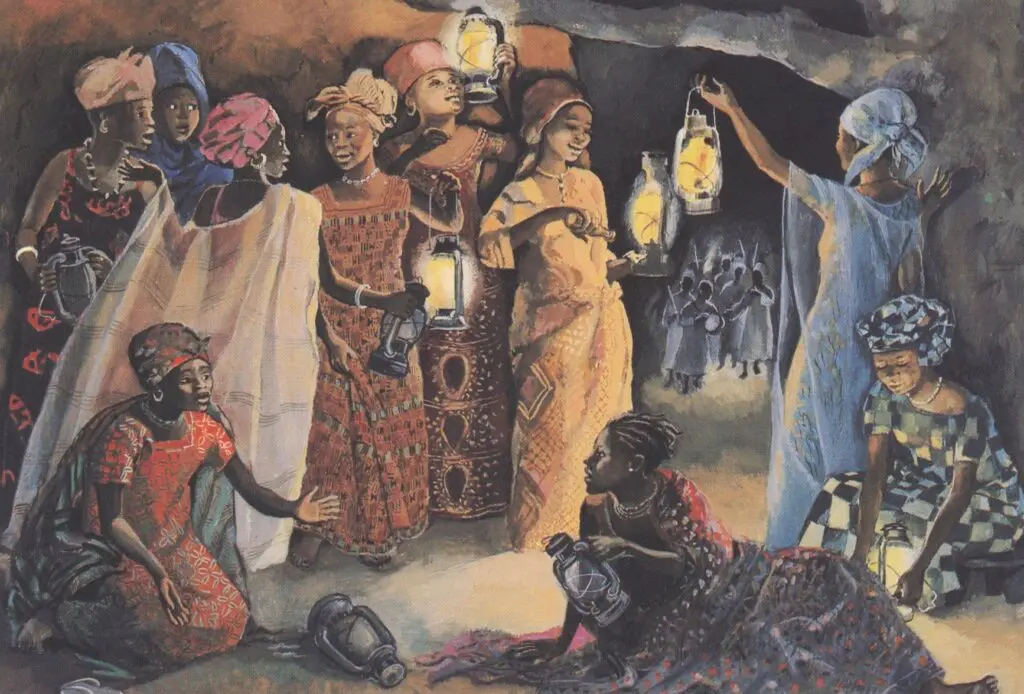
Like the bridesmaids portrayed in today’s Gospel reading, followers of Christ are faced with the question of how they will prepare even if his coming is delayed. The harsh outcome for the foolish bridesmaids might leave us wondering: Is God toying with us? Is the Holy One leaving us guessing, trying to catch us off guard while playing some grand cosmic game of “gotcha”? The parable teaches that rather than asking when Christ will come again, we should instead be asking how to prepare for that coming—whenever it might happen.
The story of the ten bridesmaids calls to mind two earlier teachings in Matthew’s Gospel. In speaking of the foolish bridesmaids who arrive late for the wedding crying “Lord, lord” (Mt 25:11), Jesus may have been recalling his earlier saying that “not everyone who says to me, ‘Lord, Lord,’ will enter the kingdom of heaven, but only the one who does the will of my Father in heaven” (Mt 7:21). Likewise, the foresight of the wise bridesmaids in bringing extra oil so that their lamps could keep burning may refer back to Jesus’s words encouraging disciples to “let your light shine before others, so that they may see your good works and give glory to your Father in heaven” (Mt 5:16).
While Jesus advises us to be prepared at all times, he also suggests that delay should not lead believers to be gripped by anxiety. After all, the entire group of bridesmaids become drowsy and fall asleep, even the ones who are ready with extra oil. He teaches instead that if we, like him, do the will of God and devote ourselves to good works, we will be prepared for his coming and in fact can enjoy an experience of that great feast even now.
In today’s reading from 1 Thessalonians, Paul is addressing a community that had expected that Jesus would have returned by then. At least some in the church of Thessalonica were anxious that other members had died and would miss out on the salvation that Jesus would bring about at his coming. Paul is responding in this passage to grief that had been compounded by concern about delay.
Writing with a pastoral heart, Paul offers a consoling and encouraging message to his readers so that they might “not grieve as others do who have no hope” (1 Thess 4:13). The key to our hope, he teaches, is the resurrection of Jesus, which is the pledge of new life for all. At the coming of Christ, the dead will rise and the living will join them to “be with the Lord forever” (1 Thess 4:17). In their ministry to those who are grieving, pastoral musicians and song leaders follow Paul’s lead in this passage as they choose hymns and songs that proclaim the resurrection of Christ and our hope in the promise of new life.
In an age when so many are experiencing discouragement, disappointment, or disillusionment, today’s Scriptures proclaim hope in the One who comes and encourage us to be attentive and prepared to welcome his coming at times and in ways that we might not expect.
A Hymn for Today: “Wake, awake, for night is flying”
German pastor Philipp Nicolai wrote the original version of this text (and the tune to which it is normally sung) in the wake of a severe pestilence that caused approximately 1,300 deaths in his parish alone. Today’s Gospel reading provided the inspiration for the first two stanzas of this revered hymn that celebrates the coming of Christ and our share in his glory. Johann Sebastian Bach incorporated this hymn and its tune into his Cantata 140, which was intended for a Sunday near the end of the church year on which the Gospel of the ten bridesmaids was read. Bach’s famous chorale prelude on “Wachet auf” (the hymn’s German name), often heard during Advent, is drawn from that cantata. Listen here.
Wake, awake, for night is flying,
the watchmen on the heights are crying:
awake, Jerusalem, at last.
Midnight hears the welcome voices,
and at the thrilling cry rejoices:
“Come forth, you maidens! Night is past.
The bridegroom comes! Awake;
your lamps with gladness take!” Alleluia!
Rise and prepare the feast to share;
go, meet the bridegroom, who draws near.
Zion hears the watchmen singing,
and all her heart with joy is springing.
She wakes, she rises from her gloom.
Her dear friend comes down, all glorious,
the strong in grace, in truth victorious:
her star is ris’n; her light is come.
Now come, O Blessed One.
Lord Jesus, God’s own Son. Sing hosanna!
Oh, hear the call! Come one, come all,
and follow to the banquet hall.
Gloria! Let heav’n adore you!
Let saints and angels sing before you,
with harp and cymbal’s clearest tone.
Gates of pearl, twelve portals gleaming,
lead us to bliss beyond all dreaming,
with angel choirs around your throne.
No eye has caught the light,
no ear the thund’ring might of such glory.
There we will go; what joy we’ll know!
There sweet delight will ever flow.
Text: Philipp Nicolai, 1556-1608; translation composite (Source: Evangelical Lutheran Worship)
Tune: WACHET AUF
Image Credit: The Ten Young Women, JESUS MAFA, Cameroon, 1973


To receive these weekly reflections by email, please send a message to office@thehymnsociety.org and type “Lectionary” in the subject line.